Verify your email
Hi Johny, to view the full content, please verify your email address by clicking the link sent to youremail@gmail.com
Resend Verification Email
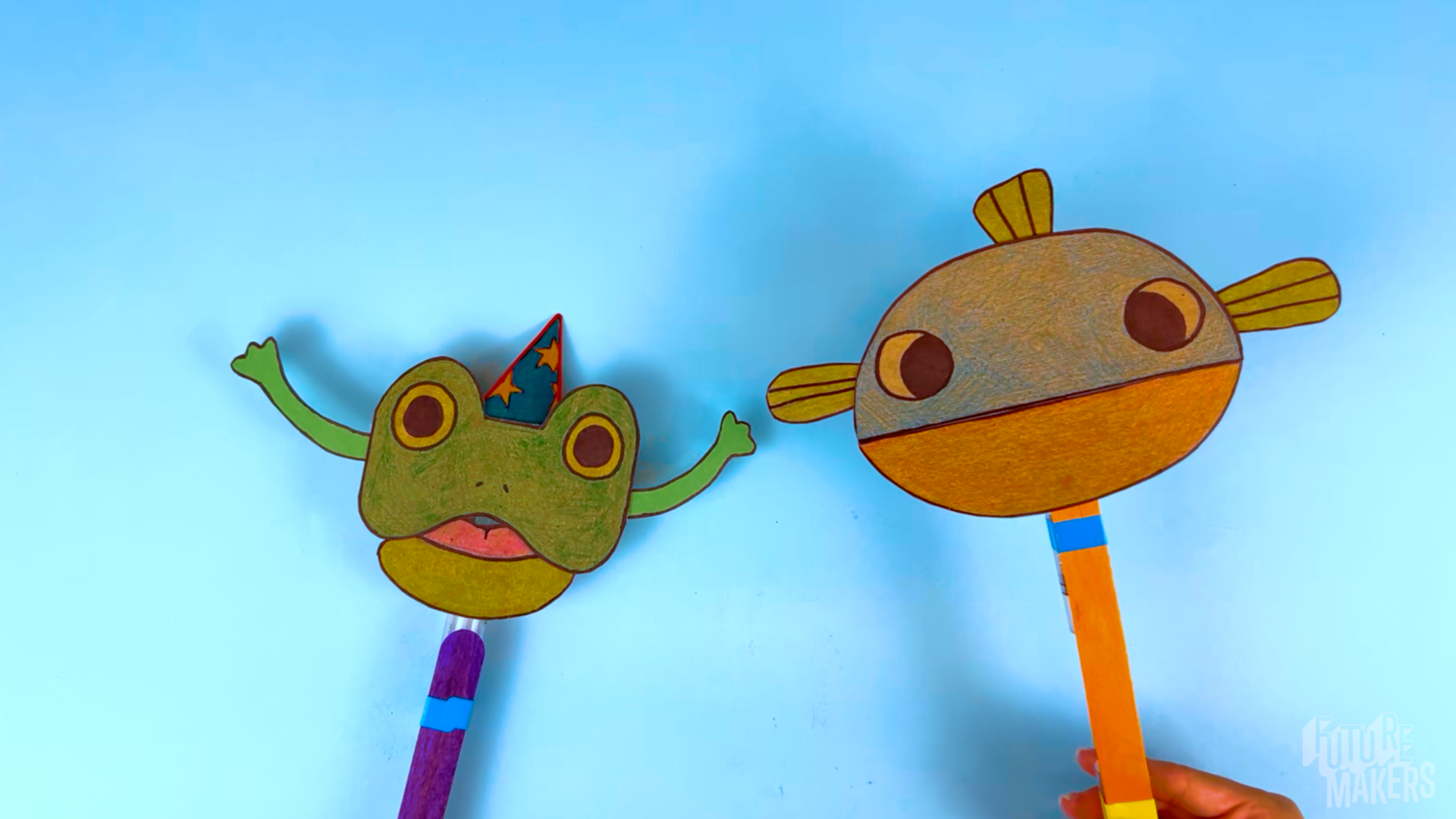
Engineer a creature that can move its giant mouth with air pressure! Learners build a pneumatic system from pistons, cylinders, and a connecting tube, then design a unique monster face that opens and closes when air is pushed and pulled through the system. This Spark weaves science, engineering, and creature design into one hands-on challenge where every monster looks - and sounds - different.
Get the materials that pair with this educator guide.
Get the materials that pair with this educator guide.
Quick Start gets the main resources in hand. The guide below helps with the decisions that happen before, during, and after students build.
What students build and how the activity works.
Prep questions and pro tips.
Classroom sequence and prompts.
Learning goals and curriculum connections.
Fixes, adaptations, and extensions.
Monster Mouths introduce learners to pneumatics - the science of moving things with air pressure. Each learner receives two pistons and cylinders, a plastic connector tube, a wooden stick, sticky foam strips, thin cardboard, and an instruction sheet. Using these materials they build a working air-powered system that transfers push-and-pull forces from one piston to another.
The build follows nine steps: learners explore their materials, assemble and test a pneumatic system, attach the cylinders to a stick, design and cut a monster face from cardboard, attach the face so the mouth moves, then test and iterate. Extensions invite learners to add creature features, create backstories with a printable story worksheet, or swap air for water to discover hydraulics.

Scissors for cutting the cardboard mouth and any additional creature features.
Markers or drawing tools for designing the monster face on the cardboard rectangle.
Question: What do you notice about the different pieces in your kit? How do you think they might work together?
Question: What do you think will happen when we connect these two cylinders together?
Question: When you push one piston in, what happens to the other one? What is making it move?
Question: How can you attach the cylinders so they stay firmly in place on the stick?
Question: What kind of creature will your monster be? What features will make it unique?
Question: What will happen when you cut along the mouth line? How many pieces will you have?
Question: Which part of the face should stay still, and which part should move? Why?
Question: Does your monster's mouth open and close the way you expected? What could you adjust?
Question: Now that your Monster Mouth is working, what could you add or change to make it truly one of a kind?
RI.K-2.7 – Use illustrations and words in a text to describe key ideas: Example: Learners refer to the labeled instruction sheet and visual diagrams in their Monster Mouths kit to identify which component is the piston, which is the cylinder, and how the tube connects them - using both pictures and text to understand the pneumatic system before assembling it.
SL.K-2.1 – Participate in collaborative conversations: Example: Learners describe to a partner what happens when they push one piston in and observe the other piston moving out, using vocabulary like “piston,” “cylinder,” and “air pressure” to explain how their Monster Mouth opens and closes during the testing phase.
RI.3-5.3 – Explain relationships between concepts in a text: Example: Learners explain the cause-and-effect relationship between pushing a piston and the mouth opening by tracing how air travels from one cylinder through the tube to the other, connecting the written instructions to the physical pneumatic system they built.
W.3-5.3 – Write narratives to develop real or imagined experiences: Example: Learners write their Monster Mouth character’s backstory using the story planning worksheet, developing an imagined creature with a name, home, and voice - then organizing a narrative with a beginning, middle, and end to perform as a puppet show during the storytelling extension.
RST.6-8.3 – Follow a multistep procedure when carrying out experiments: Example: Learners follow the nine-step Monster Mouths build sequence precisely, understanding that the order matters - pulling one piston out and leaving the other pushed in before connecting the tube, because reversing this sequence means the pneumatic system won’t transfer air correctly.
SL.6-8.1 – Engage in collaborative discussions with diverse partners: Example: Learners compare pneumatic and hydraulic systems during the extension activity, discussing what changes when water replaces air in the cylinder and debating why the Monster Mouth feels different to operate - building scientific argumentation skills through hands-on observation.
K.MD.A.1 – Describe measurable attributes of objects: Example: Learners compare the lengths of the piston when pushed in versus pulled out and observe how far the Monster Mouth opens, describing the relationship between how far they push one piston and how far the other extends - connecting physical measurement to the pneumatic system’s behavior.
K.G.A.1 – Describe objects using names of shapes and relative positions: Example: Learners identify the cylinder as a three-dimensional shape and describe spatial relationships during attachment - “the top of the face connects to the piston” and “the bottom of the face connects to the cylinder” - using positional language like above, below, and between.
3.MD.B.4 – Generate measurement data by measuring lengths: Example: Learners measure how far the piston extends from the cylinder at different push strengths and compare the distance the Monster Mouth opens, generating data about the relationship between force applied and mouth displacement in their pneumatic system.
4.OA.C.5 – Generate and analyze patterns: Example: Learners observe the push-pull pattern of their pneumatic system - when one piston goes in, the other comes out, and vice versa - identifying this as a consistent, repeating inverse relationship and predicting what will happen before each push or pull action.
6.SP.B.5 – Summarize numerical data sets in relation to their context: Example: Learners measure how far the Monster Mouth opens across five different push strengths, recording each opening distance in a data set, then summarize it by finding the typical (median) opening distance and the range between the smallest and largest openings - describing what that spread says about how consistent their pneumatic system is.
6.EE.A.2 – Write, read, and evaluate expressions: Example: Learners express the piston displacement relationship as a variable expression - if pushing piston A in by distance d causes piston B to extend by distance d, they describe this 1:1 inverse relationship and predict what happens when the tube length or cylinder diameter changes.
K-PS2-1 – Motion and Stability: Forces and Interactions: Example: Learners explore how pushing and pulling one piston causes the other piston to move in the opposite direction, observing firsthand that forces (pushes and pulls) can change the motion of objects - and feeling the resistance when they try to push both pistons in at the same time.
K-2-ETS1-2 – Engineering Design: Develop a simple sketch, drawing, or physical model: Example: Learners sketch their monster face design with pencil on the cardboard before committing with markers, planning where the mouth line will go so the face separates into two pieces that align with the piston-and-cylinder system - iterating on their design when the first attempt doesn’t work.
3-PS2-1 – Forces and Interactions: Cause and Effect: Example: Learners investigate how the force of pushing air through the tube causes the Monster Mouth to open, testing different push strengths to observe how harder pushes create wider mouth openings - establishing a cause-and-effect relationship between applied force and pneumatic system response.
3-5-ETS1-3 – Plan and carry out fair tests to identify failure points: Example: Learners systematically troubleshoot a stuck Monster Mouth system by checking whether both pistons are pushed in (no air to transfer), whether the tube connection is loose (air escaping), or whether the sticky strips are holding - isolating one variable at a time to identify the failure point.
MS-PS3-5 – Energy Transfer: Construct an explanation of energy transfer: Example: Learners explain how energy transfers through their Monster Mouths pneumatic system - the mechanical energy of pushing a piston converts to pneumatic energy as air compresses and travels through the tube, then converts back to mechanical energy to move the opposite piston and open the creature’s mouth.
MS-ETS1-2 – Engineering Design: Evaluate competing design solutions: Example: Learners compare their Monster Mouth’s performance when using air versus water (the hydraulics extension), evaluating which fluid produces smoother, more controlled mouth movement - and discussing trade-offs between the simplicity of air and the force consistency of water in their pneumatic-to-hydraulic redesign.
When the system is stuck, it’s because there’s no air in either cylinder (both pistons pushed in) or air is trapped in both cylinders (both pistons pulled out). Make sure one piston is pushed in and the other is pulled out before connecting the tube, then test with a push and pull.
If the face won’t open enough or close all the way, try adjusting the top piece of the face up or down on the piston. You may need to use more adhesive. Make sure the bottom of the face is stuck firmly to the bottom cylinder.
Press the sticky strips down firmly on both the cylinder and the cardboard. If parts keep coming off, have some standard tape available for learners to reinforce the connection.
Check that the tube is pushed and twisted snugly onto each cylinder tip - if the seal isn’t tight, air escapes and the system loses power. Also verify that one piston is in and the other is out so air can flow between them.