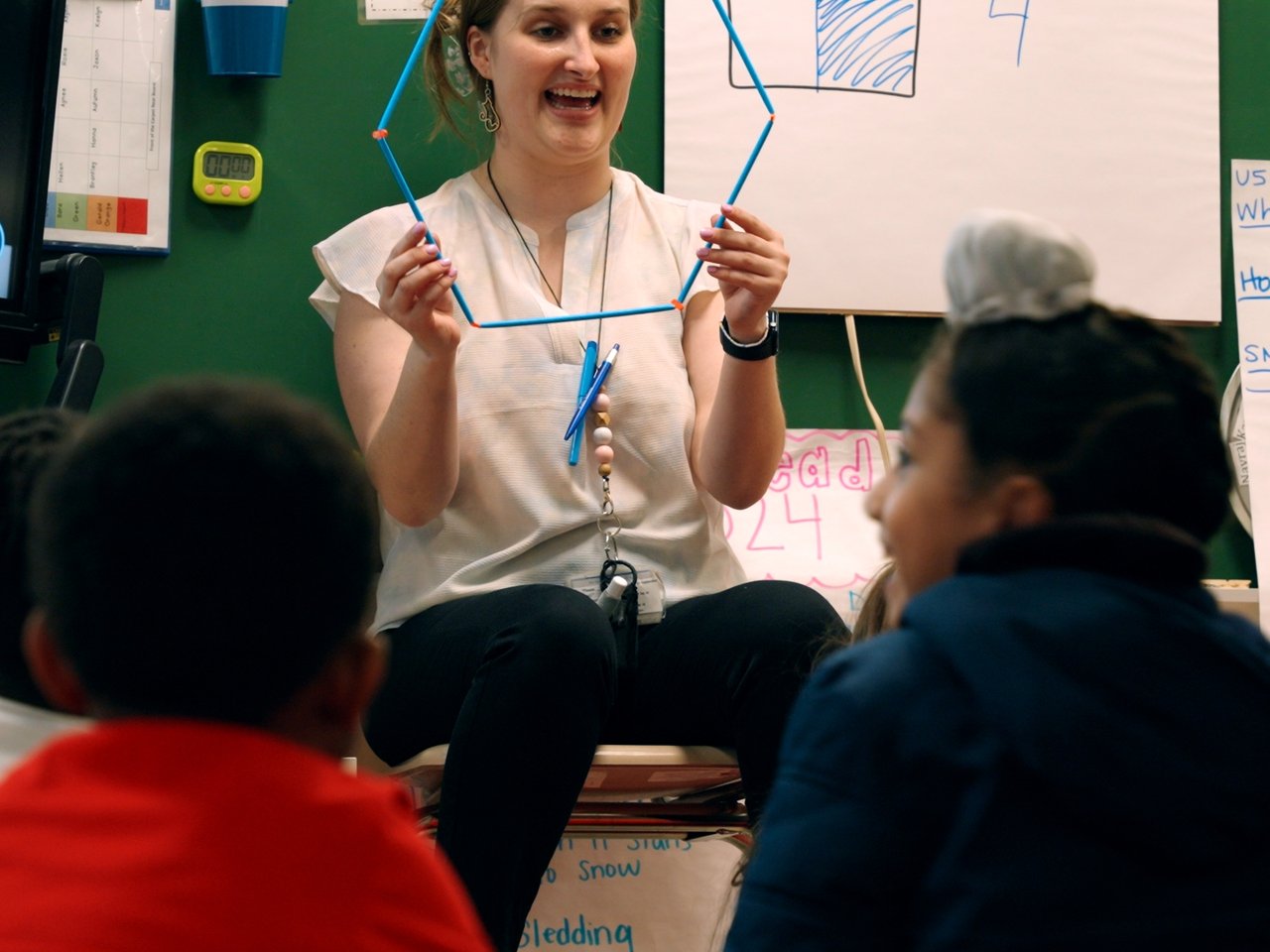
FutureMakers Sparks are screen-free building kits that community school coordinators use for family engagement nights, student-led cascade events, and after-school clubs, at $4.20 to $6.95 per learner.
Last reviewed September 24, 2026
How to buy
Do you accept purchase orders and tax-exempt purchasing for a small community-school budget?
FutureMakers accepts purchase orders on Net 30 terms through the instant quote builder, a purchasing card with an automatic 5% discount and no cap, and tax-exempt purchasing. Getting a quote: check "Our organization is tax-exempt" in the quote builder's Purchasing Information section and enter your tax ID number. Buying directly in the store: create a free account and submit your tax ID number with a tax-exempt certificate for review.
Start a PO-ready quote at /quote. See the full how to buy FAQ for purchase order terms, vendor paperwork, and every payment option.
How do I use the order form on the website?
The order form is FutureMakers' quote builder at kidsmakethingsbetter.com/quote. Tell it about your program, adjust quantities in a line-item editor, and get a PDF quote to forward to purchasing. See the full how to buy FAQ for the complete step-by-step and every payment option.
Can FutureMakers provide a W-9 or get set up as an approved vendor in our district?
Yes. Check "We need a W-9 from FutureMakers" in the quote builder's Purchasing Information section and FutureMakers sends its W-9 with your PDF quote; the same W-9 is also a direct download from the site footer. If your district needs FutureMakers registered as a vendor in its own procurement system, reply to the quote email with the forms your district requires; FutureMakers completes its side the same day for most systems, though your district's own review and approval afterward is outside FutureMakers' control.
What it looks like on the day
What is a good hands-on activity for a community school family engagement night?
FutureMakers Sparks fit a community school family night because each kit runs one build per family in 20 to 60 minutes, depending on the Spark, screen-free, at a shared table. A family or STEM night is the most common way community schools use Sparks. A typical night draws about 20% of school enrollment, so a 500-student school plans for roughly 250 attendees.
What does a student-led (cascade) family night actually look like?
In a FutureMakers cascade family night, a class or grade level builds a Spark first, then leads a station teaching the same build to visiting families. A cascade night can anchor on a handful of classrooms and spread outward to a whole school. Teacher involvement on the night is minimal since the prepared students do the teaching, and caregivers come specifically to watch their own child present.
Can Sparks work for a middle-school community-school event?
Fourteen of the 17 FutureMakers Sparks are designed to run through 8th grade, and several, including Drawbots, Electric Vehicles, Monster Claws, Crankie Contraptions, and Strawbots, carry standards codes for grades 6 to 8 as well. That makes them a plausible fit for a middle-school event.
A community-school family engagement night, run of show
A typical schedule for a cascade-model family night, built from FutureMakers' cascade format and typical family-night attendance.
0:00Doors open, check-in
Families sign in. A 500-student school plans for roughly 250 attendees, about 20% of enrollment.
0:10Welcome
The coordinator frames the night in 2 to 3 minutes; no lecture, straight to the stations.
0:15Cascade stations open
Students who built the Spark earlier that week lead build stations for their own families. Teacher involvement is minimal on the night itself.
0:45Share-out
Each table or station shows its finished build to the room; caregivers watch their own child present.
0:55Pack up and go home
Families take their build home. The take-home artifact is the reason families reported coming back the next time.
Staff, prep, and time
How do I lead a maker activity for 30 kids with almost no prep time?
A FutureMakers Class Pack covers 25 to 30 learners and most Sparks need no setup beyond scissors and a ruler on hand. Straw Structures, for example, only asks the facilitator to keep scissors nearby for trimming straws and a ruler for measuring finished builds. Each learner opens a sealed kit, follows the visual guide, and builds independently, so one adult can lead a 30-kid session without pre-building anything.
Do my staff or parent volunteers need a STEM background to lead a Spark?
No. FutureMakers designs Sparks so a facilitator's real question is who leads the session, not what's in the box. Every Spark ships with a visual guide, a coaching video, and a slide deck through a free educator account. That said, training doesn't always land the same way twice. Even after in-person training, some staff may not feel confident leading a program on their own.
Get the videos and slide decks at coach-with-sparks before your first session.
What is a no-prep activity a lead partner can run for a multi-age family workshop?
A lead-partner agency or teaching artist can set up several Sparks at once as separate stations, since each one is self-contained and needs no shared setup. A lead partner can order several different Class Packs, one per Spark, for exactly this kind of multi-station event. FutureMakers also books teaching artists directly through Arts for Learning Maryland.
A Drawbots station running through the Arts for Learning Maryland partnership.
What happens if 50 or more families show up to a Sparks family night?
FutureMakers Sparks scale by adding Class Packs of 25, so a 50-family turnout is two Class Packs and a 175-family turnout is seven. School events have drawn 175 students at the low end and 300 to 400 at the high end. Order enough Class Packs for your expected headcount plus a buffer, since a family night's real draw is often close to 20% of total school enrollment.
How many adults or volunteers do I need to host a Sparks family night for 250 people?
FutureMakers doesn't publish a headcount formula for a full night, but the math most coordinators already use is straightforward. One adult or trained student leader leads a single Spark station for up to 30 kids, the same ratio a single classroom session uses. A 250-person family night with 6 to 8 stations needs roughly 6 to 8 station leads, plus 1 or 2 more people floating for check-in and troubleshooting.
Who's responsible for building access and cleanup on the night of a Sparks family night?
FutureMakers ships the kits, not the venue. Building access, setup, and cleanup fall to the host school or site, usually the same community school coordinator who planned the night, sometimes alone and sometimes with help. Facilitators often cover a family night by pulling in special-area teachers, paraprofessionals, and whoever else is available to staff it. Line up that support before the event, not the week of.
Does a Sparks family night need its own food budget?
FutureMakers Sparks kits don't include food, so a family night's food line, whether that's a catered spread, a potluck, or just water and snacks, sits outside the kit order. It needs its own budget line and an allergy check, the same as any other school event. Coordinators commonly keep food and materials as two separate costs rather than folding one into the same purchase order, since they usually come from different parts of a program budget.
Are FutureMakers materials available in Spanish for a family STEM night?
FutureMakers designs its printed guides to be illustrated first, so a family with limited English can follow a build from the pictures alone, and any written instructions are printed in English and Spanish. There's no live interpreter service built into a family night. If your building needs interpretation for a welcome or announcements, that's a staffing question for your own event, the same as any other school program.
What do younger siblings do at a Sparks family night if they're not in the target grade band?
FutureMakers doesn't have a sibling-specific program. Several Sparks start at Pre-K, including Blendies and Straw Structures, so a younger sibling can build a simpler version next to an older one instead of sitting out. Adding a few extra Single Learner Packs of a PK-friendly Spark, at $8.95 each, is a low-cost way to cover siblings without ordering a whole extra pack for a grade band that isn't the event's focus.
What do I do if more families show up than the kits I ordered, on the night itself?
FutureMakers doesn't have a same-night emergency reorder, since most orders ship within one business day rather than same-day. Coordinators commonly plan around a shortfall by pairing two families on one kit at a station instead of turning anyone away, and by keeping a simple no-kit fallback activity ready for overflow. The real fix sits upstream: order past your expected headcount, not to it, since a family night's real draw is often close to 20% of enrollment, and that's an average, not a ceiling.
How much does it cost to host a Sparks family night for 50 people?
A 50-learner FutureMakers family night runs $210 to $244, or $4.20 to $4.88 per child, for two Class Packs of the same Spark. Class Packs hold 25 learners and price from $105 to $122 depending on the Spark; Small Group Packs of 10 run $59.50 to $69.50, or $5.95 to $6.95 per learner, for a smaller station-based event.
Can I pay for Sparks with a grant instead of my program budget?
Yes. Grant funding can pay for a Sparks cascade project, and FutureMakers can invoice a grant directly, so no money has to change hands between the school and FutureMakers.
How can I protect an event date from a purchase order stuck in a budget freeze?
Protect your event date by locking in the 90-day price hold that comes with every FutureMakers quote, so a freeze that clears in a few weeks doesn't force a rushed re-quote. If you need to move faster than the freeze allows, a purchasing card often clears outside the formal PO queue entirely and carries an automatic 5% discount with no cap, and once a PO is cut, orders ship within one business day. For a smaller stopgap, Single Learner Packs at $8.95 each can cover part of the event while the full order works through approval.
Can I order fewer than 10 units if my group is small?
Yes. Below a Small Group Pack of 10, FutureMakers sells a Single Learner Pack at $8.95 each. A group of 4 to 8 kids can buy exactly the number needed instead of a full pack. For an in-between quantity or a mixed order across several Sparks, email us directly to work out the exact count rather than rounding up to full packs.
What screen-free activities boost family attendance at community-school events?
FutureMakers Sparks work as an attendance draw because each family leaves with a build the child made and kept. That's a concrete reason to show up. On FutureMakers' 2025 Recess Happy Hour RSVP form, roughly 15 to 20 community-school and family-engagement professionals who'd already signed up for the event named their top program need: chronic absenteeism and attendance topped the list at 7 responses, ahead of academic support and family engagement (4 each).
How does FutureMakers fit the four pillars of community schools?
Community schools are commonly organized around four pillars: integrated support services, expanded learning time, active family and community engagement, and collaborative leadership. Sparks fit two of those: expanded learning time, through after-school clubs and extended-day sessions, and family and community engagement, through cascade family nights where caregivers come specifically to watch their child present.
Yes. Dozens of community schools in a single Maryland school district have purchased Sparks, and more have tried a free sample. Some have reordered many times, through both a recurring program-services contract and coordinator-driven take-home kit orders.
What are some real examples of social and emotional growth during a Sparks session?
Social and emotional growth during a FutureMakers Sparks session looks like specific moments of collaboration, not a formal outcome measurement. A Straw Structures team argues over whose design to build taller, a family works together to make their structure "fit people inside," and a Crankie Contraptions builder shares their finished scroll story with a neighbor or the whole group. The build guides are written to create exactly these moments.
How does the cascade model build confidence, not just content knowledge?
FutureMakers' cascade model puts a student in the coaching seat. A grade level builds a Spark, writes its own coaching guide, then teaches another grade level over 3 to 4 class periods, following a 'show, don't tell' ground rule instead of just explaining. The student who was taught the technique becomes the one demonstrating it to a caregiver at the family night, which is a different kind of proof than a worksheet grade.
What academic standards do Sparks align to for a purchase justification?
Every FutureMakers Spark carries specific NGSS and Common Core codes printed directly on its public guide page, which coordinators can cite in district purchase justifications. Straw Structures, for example, lists NGSS K-2-ETS1-2 (develop a simple sketch, drawing, or physical model) alongside Common Core measurement and geometry codes. FutureMakers describes broader social-emotional alignment as well, though that isn't repeated here as a code-level fact.
Which Sparks work best for which grade band in a multi-age family event?
For a multi-age family night spanning kindergarten through 8th grade, pair a younger-band Spark like Blendies or Mazes with an upper-elementary Spark like Monster Claws or Electric Vehicles. Blendies runs Pre-K through 8th grade and Mazes kindergarten through 8th grade, while Monster Claws and Electric Vehicles are built for grades 3 through 8. The table below lists 10 Sparks, their grade fit, and a sample standards code for each.
<script type="application/ld+json">{"@context": "https://schema.org", "@type": "FAQPage", "mainEntity": [{"@type": "Question", "name": "Do you accept purchase orders and tax-exempt purchasing for a small community-school budget?", "acceptedAnswer": {"@type": "Answer", "text": "FutureMakers accepts purchase orders on Net 30 terms through the instant quote builder, a purchasing card with an automatic 5% discount and no cap, and tax-exempt purchasing. Getting a quote: check \"Our organization is tax-exempt\" in the quote builder's Purchasing Information section and enter your tax ID number. Buying directly in the store: create a free account and submit your tax ID number with a tax-exempt certificate for review. Start a PO-ready quote at /quote . See the full how to buy FAQ for purchase order terms, vendor paperwork, and every payment option."}}, {"@type": "Question", "name": "How do I use the order form on the website?", "acceptedAnswer": {"@type": "Answer", "text": "The order form is FutureMakers' quote builder at kidsmakethingsbetter.com/quote . Tell it about your program, adjust quantities in a line-item editor, and get a PDF quote to forward to purchasing. See the full how to buy FAQ for the complete step-by-step and every payment option."}}, {"@type": "Question", "name": "Can FutureMakers provide a W-9 or get set up as an approved vendor in our district?", "acceptedAnswer": {"@type": "Answer", "text": "Yes. Check \"We need a W-9 from FutureMakers\" in the quote builder 's Purchasing Information section and FutureMakers sends its W-9 with your PDF quote; the same W-9 is also a direct download from the site footer. If your district needs FutureMakers registered as a vendor in its own procurement system, reply to the quote email with the forms your district requires; FutureMakers completes its side the same day for most systems, though your district's own review and approval afterward is outside FutureMakers' control."}}, {"@type": "Question", "name": "What is a good hands-on activity for a community school family engagement night?", "acceptedAnswer": {"@type": "Answer", "text": "FutureMakers Sparks fit a community school family night because each kit runs one build per family in 20 to 60 minutes, depending on the Spark, screen-free, at a shared table. A family or STEM night is the most common way community schools use Sparks. A typical night draws about 20% of school enrollment, so a 500-student school plans for roughly 250 attendees. See the Straw Structures guide for a sample 30 to 60 minute build, or browse family engagement night ideas for libraries ."}}, {"@type": "Question", "name": "What does a student-led (cascade) family night actually look like?", "acceptedAnswer": {"@type": "Answer", "text": "In a FutureMakers cascade family night, a class or grade level builds a Spark first, then leads a station teaching the same build to visiting families. A cascade night can anchor on a handful of classrooms and spread outward to a whole school. Teacher involvement on the night is minimal since the prepared students do the teaching, and caregivers come specifically to watch their own child present. Read the Cascading Confidence blog post for the coaching model behind it."}}, {"@type": "Question", "name": "Can Sparks work for a middle-school community-school event?", "acceptedAnswer": {"@type": "Answer", "text": "Fourteen of the 17 FutureMakers Sparks are designed to run through 8th grade, and several, including Drawbots, Electric Vehicles, Monster Claws, Crankie Contraptions, and Strawbots, carry standards codes for grades 6 to 8 as well. That makes them a plausible fit for a middle-school event. Check standards fit on the Electric Vehicles guide , which is built for grades 3 through 8."}}, {"@type": "Question", "name": "How do I lead a maker activity for 30 kids with almost no prep time?", "acceptedAnswer": {"@type": "Answer", "text": "A FutureMakers Class Pack covers 25 to 30 learners and most Sparks need no setup beyond scissors and a ruler on hand. Straw Structures, for example, only asks the facilitator to keep scissors nearby for trimming straws and a ruler for measuring finished builds. Each learner opens a sealed kit, follows the visual guide, and builds independently, so one adult can lead a 30-kid session without pre-building anything. Browse the Straw Structures guide to see the full prep list."}}, {"@type": "Question", "name": "Do my staff or parent volunteers need a STEM background to lead a Spark?", "acceptedAnswer": {"@type": "Answer", "text": "No. FutureMakers designs Sparks so a facilitator's real question is who leads the session, not what's in the box. Every Spark ships with a visual guide, a coaching video, and a slide deck through a free educator account. That said, training doesn't always land the same way twice. Even after in-person training, some staff may not feel confident leading a program on their own. Get the videos and slide decks at coach-with-sparks before your first session."}}, {"@type": "Question", "name": "What is a no-prep activity a lead partner can run for a multi-age family workshop?", "acceptedAnswer": {"@type": "Answer", "text": "A lead-partner agency or teaching artist can set up several Sparks at once as separate stations, since each one is self-contained and needs no shared setup. A lead partner can order several different Class Packs, one per Spark, for exactly this kind of multi-station event. FutureMakers also books teaching artists directly through Arts for Learning Maryland. See Arts for Learning Maryland booking for the coached-session option."}}, {"@type": "Question", "name": "What happens if 50 or more families show up to a Sparks family night?", "acceptedAnswer": {"@type": "Answer", "text": "FutureMakers Sparks scale by adding Class Packs of 25, so a 50-family turnout is two Class Packs and a 175-family turnout is seven. School events have drawn 175 students at the low end and 300 to 400 at the high end. Order enough Class Packs for your expected headcount plus a buffer, since a family night's real draw is often close to 20% of total school enrollment. Compare pack sizes on the Spark Catalogue ."}}, {"@type": "Question", "name": "How many adults or volunteers do I need to host a Sparks family night for 250 people?", "acceptedAnswer": {"@type": "Answer", "text": "FutureMakers doesn't publish a headcount formula for a full night, but the math most coordinators already use is straightforward. One adult or trained student leader leads a single Spark station for up to 30 kids, the same ratio a single classroom session uses. A 250-person family night with 6 to 8 stations needs roughly 6 to 8 station leads, plus 1 or 2 more people floating for check-in and troubleshooting. See the staffing math for one station on the Straw Structures guide ."}}, {"@type": "Question", "name": "Who's responsible for building access and cleanup on the night of a Sparks family night?", "acceptedAnswer": {"@type": "Answer", "text": "FutureMakers ships the kits, not the venue. Building access, setup, and cleanup fall to the host school or site, usually the same community school coordinator who planned the night, sometimes alone and sometimes with help. Facilitators often cover a family night by pulling in special-area teachers, paraprofessionals, and whoever else is available to staff it. Line up that support before the event, not the week of. See how one lead partner staffs a multi-station event on the Arts for Learning Maryland page ."}}, {"@type": "Question", "name": "Does a Sparks family night need its own food budget?", "acceptedAnswer": {"@type": "Answer", "text": "FutureMakers Sparks kits don't include food, so a family night's food line, whether that's a catered spread, a potluck, or just water and snacks, sits outside the kit order. It needs its own budget line and an allergy check, the same as any other school event. Coordinators commonly keep food and materials as two separate costs rather than folding one into the same purchase order, since they usually come from different parts of a program budget. Build the materials side of your budget at the instant quote builder ."}}, {"@type": "Question", "name": "Are FutureMakers materials available in Spanish for a family STEM night?", "acceptedAnswer": {"@type": "Answer", "text": "FutureMakers designs its printed guides to be illustrated first, so a family with limited English can follow a build from the pictures alone, and any written instructions are printed in English and Spanish. There's no live interpreter service built into a family night. If your building needs interpretation for a welcome or announcements, that's a staffing question for your own event, the same as any other school program. Preview a guide's format at the Straw Structures guide ."}}, {"@type": "Question", "name": "What do younger siblings do at a Sparks family night if they're not in the target grade band?", "acceptedAnswer": {"@type": "Answer", "text": "FutureMakers doesn't have a sibling-specific program. Several Sparks start at Pre-K, including Blendies and Straw Structures, so a younger sibling can build a simpler version next to an older one instead of sitting out. Adding a few extra Single Learner Packs of a PK-friendly Spark, at $8.95 each, is a low-cost way to cover siblings without ordering a whole extra pack for a grade band that isn't the event's focus. Browse PK-friendly Sparks on the Blendies guide ."}}, {"@type": "Question", "name": "What do I do if more families show up than the kits I ordered, on the night itself?", "acceptedAnswer": {"@type": "Answer", "text": "FutureMakers doesn't have a same-night emergency reorder, since most orders ship within one business day rather than same-day. Coordinators commonly plan around a shortfall by pairing two families on one kit at a station instead of turning anyone away, and by keeping a simple no-kit fallback activity ready for overflow. The real fix sits upstream: order past your expected headcount, not to it, since a family night's real draw is often close to 20% of enrollment, and that's an average, not a ceiling. Compare pack sizes on the Spark Catalogue ."}}, {"@type": "Question", "name": "How much does it cost to host a Sparks family night for 50 people?", "acceptedAnswer": {"@type": "Answer", "text": "A 50-learner FutureMakers family night runs $210 to $244, or $4.20 to $4.88 per child, for two Class Packs of the same Spark. Class Packs hold 25 learners and price from $105 to $122 depending on the Spark; Small Group Packs of 10 run $59.50 to $69.50, or $5.95 to $6.95 per learner, for a smaller station-based event. Build an exact quote at the instant quote builder or see full pricing on the about-sparks page ."}}, {"@type": "Question", "name": "Can I pay for Sparks with a grant instead of my program budget?", "acceptedAnswer": {"@type": "Answer", "text": "Yes. Grant funding can pay for a Sparks cascade project, and FutureMakers can invoice a grant directly, so no money has to change hands between the school and FutureMakers. Ask about grant invoicing through Arts for Learning Maryland ."}}, {"@type": "Question", "name": "How can I protect an event date from a purchase order stuck in a budget freeze?", "acceptedAnswer": {"@type": "Answer", "text": "Protect your event date by locking in the 90-day price hold that comes with every FutureMakers quote, so a freeze that clears in a few weeks doesn't force a rushed re-quote. If you need to move faster than the freeze allows, a purchasing card often clears outside the formal PO queue entirely and carries an automatic 5% discount with no cap, and once a PO is cut, orders ship within one business day. For a smaller stopgap, Single Learner Packs at $8.95 each can cover part of the event while the full order works through approval. Start a PO-ready quote at /quote ."}}, {"@type": "Question", "name": "Can I order fewer than 10 units if my group is small?", "acceptedAnswer": {"@type": "Answer", "text": "Yes. Below a Small Group Pack of 10, FutureMakers sells a Single Learner Pack at $8.95 each. A group of 4 to 8 kids can buy exactly the number needed instead of a full pack. For an in-between quantity or a mixed order across several Sparks, email us directly to work out the exact count rather than rounding up to full packs. See single-unit pricing on Single Spark Packs ."}}, {"@type": "Question", "name": "What screen-free activities boost family attendance at community-school events?", "acceptedAnswer": {"@type": "Answer", "text": "FutureMakers Sparks work as an attendance draw because each family leaves with a build the child made and kept. That's a concrete reason to show up. On FutureMakers' 2025 Recess Happy Hour RSVP form, roughly 15 to 20 community-school and family-engagement professionals who'd already signed up for the event named their top program need: chronic absenteeism and attendance topped the list at 7 responses, ahead of academic support and family engagement (4 each). See how libraries use the same model on the libraries and family engagement page ."}}, {"@type": "Question", "name": "How does FutureMakers fit the four pillars of community schools?", "acceptedAnswer": {"@type": "Answer", "text": "Community schools are commonly organized around four pillars: integrated support services, expanded learning time, active family and community engagement, and collaborative leadership. Sparks fit two of those: expanded learning time, through after-school clubs and extended-day sessions, and family and community engagement, through cascade family nights where caregivers come specifically to watch their child present. See the cascade model on the Cascading Confidence blog post ."}}, {"@type": "Question", "name": "Do community schools actually buy Sparks?", "acceptedAnswer": {"@type": "Answer", "text": "Yes. Dozens of community schools in a single Maryland school district have purchased Sparks, and more have tried a free sample. Some have reordered many times, through both a recurring program-services contract and coordinator-driven take-home kit orders. See the full catalog at Spark Catalogue ."}}, {"@type": "Question", "name": "What are some real examples of social and emotional growth during a Sparks session?", "acceptedAnswer": {"@type": "Answer", "text": "Social and emotional growth during a FutureMakers Sparks session looks like specific moments of collaboration, not a formal outcome measurement. A Straw Structures team argues over whose design to build taller, a family works together to make their structure \"fit people inside,\" and a Crankie Contraptions builder shares their finished scroll story with a neighbor or the whole group. The build guides are written to create exactly these moments. See the collaborative challenges on the Straw Structures guide ."}}, {"@type": "Question", "name": "How does the cascade model build confidence, not just content knowledge?", "acceptedAnswer": {"@type": "Answer", "text": "FutureMakers' cascade model puts a student in the coaching seat. A grade level builds a Spark, writes its own coaching guide, then teaches another grade level over 3 to 4 class periods, following a 'show, don't tell' ground rule instead of just explaining. The student who was taught the technique becomes the one demonstrating it to a caregiver at the family night, which is a different kind of proof than a worksheet grade. Read the full model on the Cascading Confidence blog post ."}}, {"@type": "Question", "name": "What academic standards do Sparks align to for a purchase justification?", "acceptedAnswer": {"@type": "Answer", "text": "Every FutureMakers Spark carries specific NGSS and Common Core codes printed directly on its public guide page, which coordinators can cite in district purchase justifications. Straw Structures, for example, lists NGSS K-2-ETS1-2 (develop a simple sketch, drawing, or physical model) alongside Common Core measurement and geometry codes. FutureMakers describes broader social-emotional alignment as well, though that isn't repeated here as a code-level fact. See the full standards list on the Straw Structures guide ."}}, {"@type": "Question", "name": "Which Sparks work best for which grade band in a multi-age family event?", "acceptedAnswer": {"@type": "Answer", "text": "For a multi-age family night spanning kindergarten through 8th grade, pair a younger-band Spark like Blendies or Mazes with an upper-elementary Spark like Monster Claws or Electric Vehicles. Blendies runs Pre-K through 8th grade and Mazes kindergarten through 8th grade, while Monster Claws and Electric Vehicles are built for grades 3 through 8. The table below lists 10 Sparks, their grade fit, and a sample standards code for each. Browse every Spark at the Spark Catalogue ."}}]}</script>