FutureMakers Sparks are hands-on, screen-free engineering kits that one learner builds and keeps, used by schools, libraries, camps, and clinicians in at least 35 states and the District of Columbia.
Last reviewed September 24, 2026
How to buy
What pack sizes are Sparks sold in, and how much do they cost?
Every FutureMakers Spark sells in three sizes. A Single Learner Pack is $8.95, a Small Group Pack of 10 runs $59.50 to $69.50, and a Class Pack of 25 runs $105.00 to $122.00, with the exact price set by Spark. See the full Spark catalogue for live pricing on all 17.
What is the per-learner cost for a Small Group Pack versus a Class Pack?
A FutureMakers Small Group Pack of 10 runs $5.95 to $6.95 per learner. A Class Pack of 25 lowers that to $4.20 to $4.88 per learner, since the larger pack spreads the fixed cost of shipping and packaging across more units.
How do I get a price quote, and what payment terms are available?
FutureMakers builds a PDF quote in about two minutes at kidsmakethingsbetter.com/quote, no salesperson required. Terms include Net 30 on purchase orders and a 5 percent discount for paying by ACH or purchasing card. A quote is valid 90 days from the date it is sent; your quote PDF states its own expiration date. Forward the PDF to your purchasing office once it lands; orders ship within one business day, and FutureMakers sends an invoice when the items ship. See the full how to buy FAQ for every payment method and discount.
How do I make a tax-exempt purchase or use a purchase order?
For a purchase order, request a PDF quote at kidsmakethingsbetter.com/quote and forward it to your purchasing office to cut the PO. Getting a quote: in the quote builder's Purchasing Information section, check "Our organization is tax-exempt" and enter your tax ID number; it prints on your quote. Buying directly in the store: create a free account and submit your tax ID number and a tax-exempt certificate for review.
Can FutureMakers provide a W-9 for vendor setup?
Yes. Check "We need a W-9 from FutureMakers" in the quote builder's Purchasing Information section and FutureMakers sends its W-9 along with your PDF quote; the same W-9 is also a direct download from the site footer. If your district needs FutureMakers registered as a vendor in its own procurement system, reply to the quote email with the forms; FutureMakers completes its side the same day for most systems, though your district's own review and approval afterward is outside FutureMakers' control.
What happens if a Spark order arrives damaged or with pieces missing?
Email sales@kidsmakethingsbetter.com within 15 days of receipt with your order number and photos if a Spark order arrives damaged, defective, or incorrect. FutureMakers arranges a replacement or refund at no cost to you, including covering return shipping if a return is needed. This is separate from the general return policy, where custom and bulk orders are final sale and any other return needs a Return Authorization requested first.
Is there a maximum order size, or does FutureMakers accept large purchase orders?
FutureMakers doesn't publish a maximum order size. Its quote tool scales up to a 300-plus-learner, multi-site tier, and purchase orders are accepted from schools, districts, museums, and registered nonprofits with Net 30 terms at any size. For a large or district-wide order, FutureMakers asks buyers to email sales@kidsmakethingsbetter.com before submitting a quote so pricing can be worked out directly.
What Sparks are
What are FutureMakers Sparks?
FutureMakers Sparks are hands-on engineering kits built for one learner at a time, screen-free from start to finish. Each of the 17 Sparks in the line comes with the materials for one build, a visual guide, a coaching video, and a slide deck, so a learner can build, test, and take home something that actually works. See the full line at kidsmakethingsbetter.com/sparks.
What makes a Spark different from a typical STEM kit?
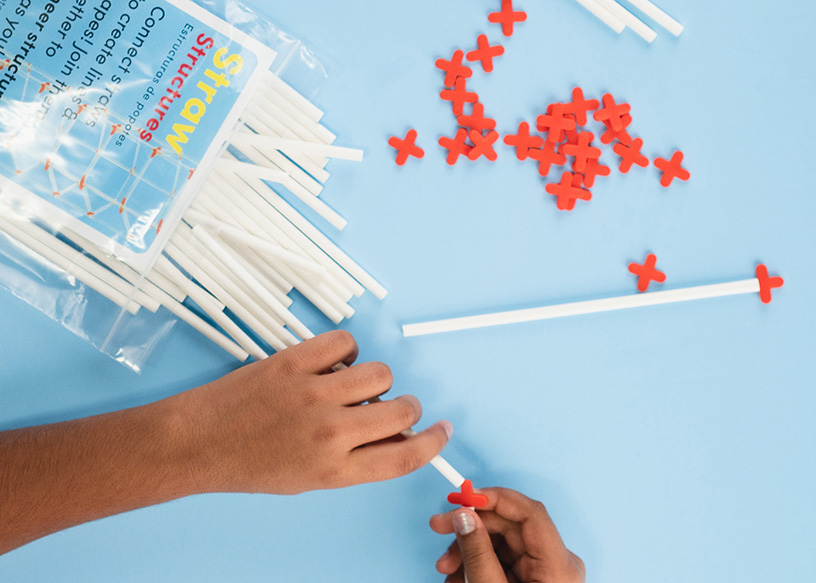
A FutureMakers Spark is open-ended rather than a single-answer kit. The guide sets up a build challenge and a starting technique, then leaves room for a learner to change the design once the first version works. Straw Structures, for example, has learners engineer a freestanding 3D shape, then rebuild it taller, wider, or as a completely different structure using the same pieces. The reusable parts and the redesign step are what separate a Spark from a one-time craft kit.
Is each Spark a 1:1 kit, or do a few kids share one?
Every FutureMakers Spark ships as a 1:1 kit. One Small Group Pack contains 10 individual builds, and one Class Pack contains 25, so each learner works with a full set of their own materials rather than sharing a single kit around a table. Some guides add a team challenge on top, such as Straw Structures' Mega Structure extension where learners combine finished builds, but the base activity is never a shared kit.
Are Sparks screen-free, and do learners keep what they build?
Yes. FutureMakers Sparks are screen-free hands-on builds, and a learner keeps the finished project. The company's own mission statement describes the goal as "playful hands-on learning" built around engineering, tinkering, making, and play rather than screen time. Because the parts are durable, a kept build can also be reopened and rebuilt a different way later instead of only displayed once.
Ages and fit
What ages and grades do FutureMakers Sparks serve?
FutureMakers designs Sparks for Pre-K through 8th grade. Fourteen of the 17 Sparks run through 8th grade, while Art Machines, Hypnotizers, and Monster Mouths are designed for kindergarten through 5th grade and are not recommended above 5th. Blendies, Linkages, Mazes, Straw Structures, and Crankie Contraptions all have guide content written specifically for a 6th to 8th grade band rather than a younger range stretched upward. The exact floor and ceiling change by Spark, covered question by question below.
Which Spark works best for which grade?
The table below lists the grade range and finished build for all 17 FutureMakers Sparks, drawn from each Spark's own guide and product listing.
Can one Spark work across a wide range of ages in the same room?
Many FutureMakers Sparks are built for exactly this. Blendies (Pre-K through 8th grade) and Linkages (kindergarten through 8th grade) are both documented as usable across that whole range in the same session, since younger learners can complete the base build while older learners take on the harder variation or a design challenge. If a room spans a wide range, pick from Blendies, Linkages, Mazes, Straw Structures, or Crankie Contraptions first.
All 17 Sparks: grades and what learners build
Grades reflect each Spark's /inst guide and Shopify listing.
Spark
Grades
What learners make
Art Machines
K-5
A cardboard kinetic sculpture with moving levers
Blendies
PK-8
A reconfigurable cardboard spinning top that blends colors
Crankie Contraptions
Grades 1-8
A hand-cranked scrolling story machine
Drawbots
Grades 2-8
A small motorized robot that draws on its own
Electric Vehicles
Grades 3-8
A working circuit-powered cardboard vehicle
Eyelusions
Grades 2-8
A motorized spinning optical-illusion thaumatrope
Flying Machines
Grades 1-8
A rubber-band-powered propeller flyer with custom wings
Hypnotizers
K-5
A spring-driven machine that draws hypnotic spirals
Linkages
Grades K-8
A moving creature or machine built from mechanical linkages
Mazes
Grades K-8
A custom zig-zag ball-drop maze wall
Monster Claws
Grades 3-8
A working pneumatic claw that opens and closes
Monster Mouths
K-5
A pneumatic monster face with a moving mouth
Scene Machines
Grades 2-8
An animated cam-driven scene with original art
Screen Machines
Grades 1-8
A hand-cranked scrolling story screen
Straw Structures
PK-8
A freestanding 3D straw-and-connector structure
Strawbots
Grades 2-8
A motorized creature that vibrates and skitters
Wind-Up Vehicles
Grades 2-8
A spring-powered rolling vehicle, then a reinvented one
Getting ready and coaching a session
How much prep does a Spark session take, and what do I need to supply besides the kit?
Almost nothing. A FutureMakers Spark kit ships with every material for the build, so there's no shopping list or setup the night before, and reading the visual guide once at kidsmakethingsbetter.com/inst is the main preparation step. A handful of Sparks call for one common item from around the room: Straw Structures asks for scissors to trim bent straws and a ruler for reference, and other guides call for a flat table or open floor space. Check the "Before You Start" section of your Spark's own guide for the exact list, since it changes Spark by Spark.
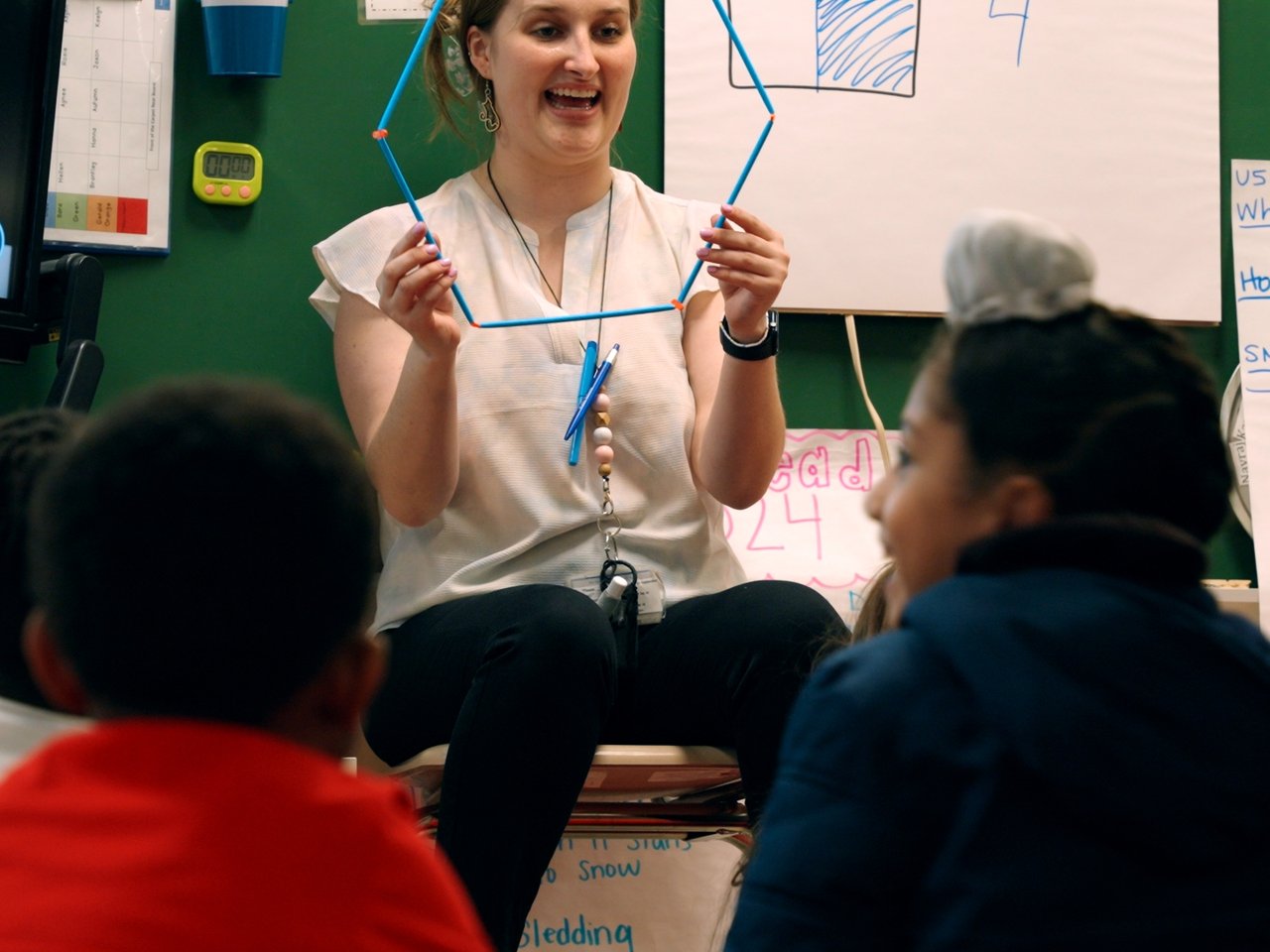
An educator introducing a Straw Structures build. Real program photo.
How long does a typical Spark session run?
Most FutureMakers Sparks run 30 to 45 minutes: Art Machines, Blendies, Eyelusions, Flying Machines, Linkages, Mazes, Monster Mouths, Strawbots, and Wind-Up Vehicles all list this range. Six run 45 to 60 minutes: Crankie Contraptions, which includes writing and performing a story, plus Drawbots, Electric Vehicles, Monster Claws, Screen Machines, and Scene Machines, which can also be split into two sessions. Straw Structures runs 30 to 60 minutes and Hypnotizers 20 to 30. As an activity station that covers the core build only, every Spark except Scene Machines takes 10 to 25 minutes.
Where do I find the guide, video, and slide deck for a Spark, and do I need an account?
The visual, step-by-step guide for every Spark is free to read at kidsmakethingsbetter.com/inst/<spark name>, no login required. A free educator account, created at kidsmakethingsbetter.com/coach-with-sparks, adds the coaching video, the slide deck, and a playbook maker for each Spark. There's no paid tier for this access.
Can I lead a Spark without a STEM or engineering background?
Yes. Every FutureMakers guide is written for the educator, not the engineer, with step-by-step visuals so a learner can often follow the build with the guide alone. Guides also flag common trouble spots ahead of time, such as loose connectors on Straw Structures or a structure that keeps tipping over, with a specific fix listed for each, so you don't have to diagnose the problem from scratch.
Standards and outcomes
Do Sparks align with NGSS and Common Core?
Yes. Every FutureMakers guide page lists specific NGSS and Common Core codes for that Spark. Straw Structures, for example, cites NGSS codes K-2-ETS1-2 and 3-5-ETS1-1 alongside Common Core codes like K.G.A.1 and 6.G.A.1. These codes are printed on the guide at kidsmakethingsbetter.com/inst rather than described only in general terms.
What social and emotional growth should I expect to see during a session?
FutureMakers guides describe this in observable moments rather than a test score. The Straw Structures guide names perseverance and teamwork directly, built by "engineering and rebuilding structures that reach the ceiling," and reminds educators that the activity "rewards patience and planning" over speed. Watching a learner try a second or third version after a first build tips over is the kind of moment the guides point to, not a formal measurement.
Who uses Sparks
Which schools, libraries, and government programs actually use FutureMakers Sparks?
FutureMakers Sparks are bought and reordered by public school districts, library systems, and county government programs, not just individual classrooms. School districts have placed repeat orders for district-wide after-school and enrichment programs, library systems have ordered Sparks for summer programs across several years, and county recreation and parks departments have placed repeat orders. Dozens of schools in a single Maryland school district have purchased Sparks directly, with more trying a free sample first.
Do community school coordinators use FutureMakers Sparks?
Yes. Community school coordinators and lead partners use Sparks for family engagement nights and multi-age workshops where low prep time and a purchase-order friendly buying process both matter. See how community schools run Sparks for the full picture, including budget-tier recommendations and grant-aligned framing.
Do libraries use Sparks for family engagement programs?
Yes. Youth services librarians and family engagement coordinators use Sparks for drop-in programs and family STEM nights, since a 1:1 kit lets a parent and child build side by side without a science background on staff. FutureMakers even sells a Library Makerspace bundle pairing two Sparks for this purpose. See how libraries run Sparks for the full picture.
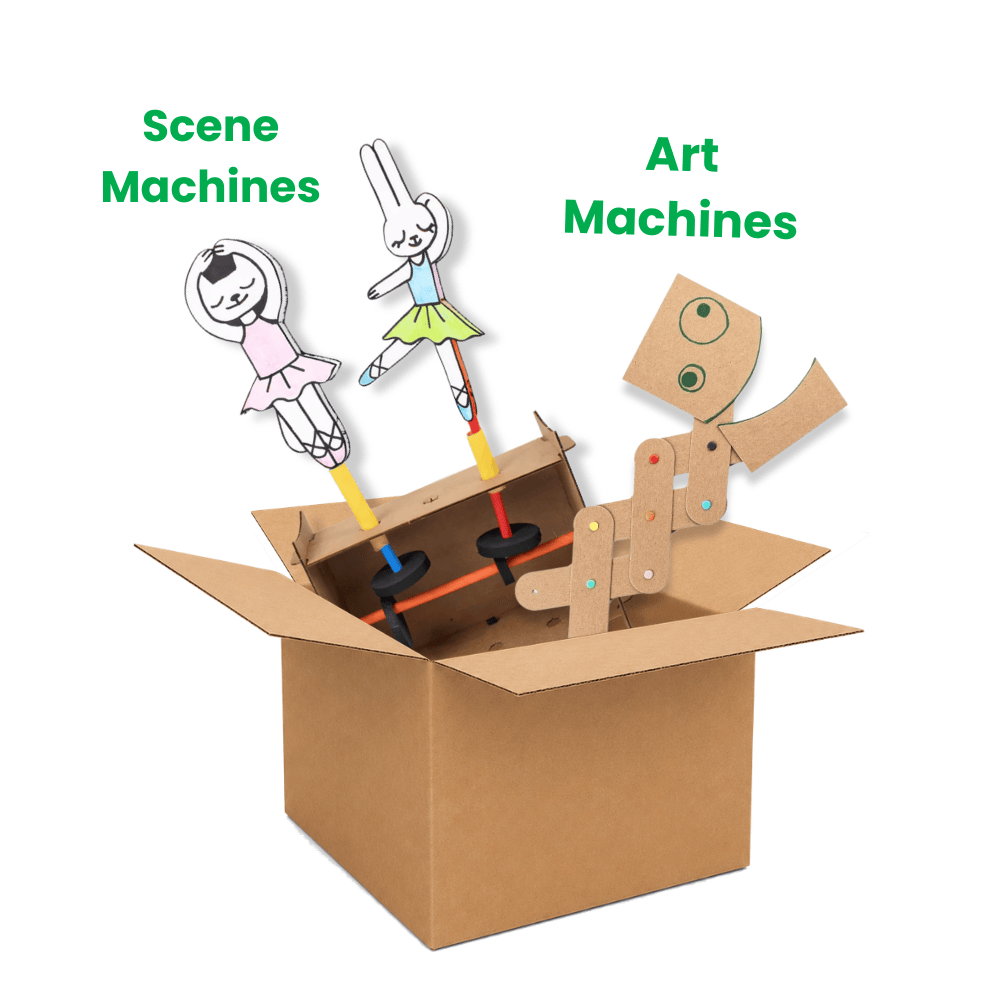
The Library Makerspace bundle pairs Scene Machines and Art Machines.
Are Sparks used in after-school and summer programs?
Yes. Out-of-school-time staff, 21st CCLC programs, camps, and parks and recreation departments use Sparks where staff may not have a teaching background and groups mix ages in the same room. FutureMakers' shop groups Sparks into an After-School Programs collection and a Summer Camp Favorites collection for this audience. See how after-school and summer programs run Sparks for the full picture.
Do classroom art and STEM teachers use Sparks?
Yes, and art teachers are FutureMakers' largest single user group. Art Machines, Hypnotizers, and Drawbots bridge mechanical engineering and visual art directly, while the standards codes on every guide give STEM and STEAM teachers a documented tie to NGSS and Common Core. See how classroom art and STEM teachers run Sparks for the full picture, including station-rotation setups.
Do clinicians use Sparks in therapy or coaching sessions?
Yes. BCBAs, play therapists, counselors, and child life specialists use a Spark as an activity toward a client's own goal, such as joint attention, turn-taking, or frustration tolerance, not as a curriculum or a claimed clinical outcome. See how clinicians use Sparks for language built around sessions and targets rather than lessons and students.
Do school counselors use Sparks for small groups and classroom lessons?
Yes. Elementary and middle school counselors use Sparks in small groups on friendship, grief, or anxiety, in classroom guidance lessons, and at check-in and check-out. See how school counselors run Sparks for the full picture, including a proposed ASCA Student Standards mapping.
About FutureMakers
When and where was FutureMakers founded?
FutureMakers was founded in 2011 and is based in Baltimore, Maryland, at 1700 W. 41st Street, Unit 475. The company's own about page describes its path from "a Baltimore-based maker education learning services company" to its current line of hands-on learning products and educator support sold across the country.
Who founded FutureMakers?
Matt Barinholtz founded FutureMakers in 2011 in Baltimore, Maryland, where the company is still based today. Since then, FutureMakers has grown from a Baltimore-based maker education learning services company into today's line of 17 Sparks kits, sold to schools, libraries, camps, and clinicians.
How many states use FutureMakers Sparks?
At least 35 states and the District of Columbia have a school, library, or youth-serving organization that has bought FutureMakers Sparks. That count is a floor, not a ceiling: it only counts the organizations where we have a complete address on file, so real reach is likely higher.
How do I reach FutureMakers directly?
Call FutureMakers at (202) 683-8609, or email info@kidsmakethingsbetter.com. The company's Baltimore office is at 1700 W. 41st Street, Unit 475, Baltimore, MD 21211, and a purchasing admin can also book a 20-minute call directly through the quote page instead of waiting on email.
How to get started with a FutureMakers Spark
The same four steps work whether you are trying one Spark or outfitting a whole program.
1Request a free sample
Ask for a sample at kidsmakethingsbetter.com/samples; it ships via UPS at no cost.
2Create your free educator account
Sign up at kidsmakethingsbetter.com/coach-with-sparks to add the coaching video, slide deck, and playbook maker for every Spark.
3Read the guide
Open the visual guide for your Spark at kidsmakethingsbetter.com/inst; it is free to read, no account needed, and lists the NGSS and Common Core codes.
4Get a quote and order
Build a PDF quote in about two minutes at kidsmakethingsbetter.com/quote. Net 30 purchase orders, 5 percent off for card or ACH with no cap, and orders ship within one business day.
<script type="application/ld+json">{"@context": "https://schema.org", "@type": "FAQPage", "mainEntity": [{"@type": "Question", "name": "What pack sizes are Sparks sold in, and how much do they cost?", "acceptedAnswer": {"@type": "Answer", "text": "Every FutureMakers Spark sells in three sizes. A Single Learner Pack is $8.95, a Small Group Pack of 10 runs $59.50 to $69.50, and a Class Pack of 25 runs $105.00 to $122.00, with the exact price set by Spark. See the full Spark catalogue for live pricing on all 17."}}, {"@type": "Question", "name": "What is the per-learner cost for a Small Group Pack versus a Class Pack?", "acceptedAnswer": {"@type": "Answer", "text": "A FutureMakers Small Group Pack of 10 runs $5.95 to $6.95 per learner. A Class Pack of 25 lowers that to $4.20 to $4.88 per learner, since the larger pack spreads the fixed cost of shipping and packaging across more units."}}, {"@type": "Question", "name": "How do I get a price quote, and what payment terms are available?", "acceptedAnswer": {"@type": "Answer", "text": "FutureMakers builds a PDF quote in about two minutes at kidsmakethingsbetter.com/quote , no salesperson required. Terms include Net 30 on purchase orders and a 5 percent discount for paying by ACH or purchasing card. A quote is valid 90 days from the date it is sent; your quote PDF states its own expiration date. Forward the PDF to your purchasing office once it lands; orders ship within one business day, and FutureMakers sends an invoice when the items ship. See the full how to buy FAQ for every payment method and discount."}}, {"@type": "Question", "name": "How do I make a tax-exempt purchase or use a purchase order?", "acceptedAnswer": {"@type": "Answer", "text": "For a purchase order, request a PDF quote at kidsmakethingsbetter.com/quote and forward it to your purchasing office to cut the PO. Getting a quote: in the quote builder's Purchasing Information section, check \"Our organization is tax-exempt\" and enter your tax ID number; it prints on your quote. Buying directly in the store: create a free account and submit your tax ID number and a tax-exempt certificate for review."}}, {"@type": "Question", "name": "Can FutureMakers provide a W-9 for vendor setup?", "acceptedAnswer": {"@type": "Answer", "text": "Yes. Check \"We need a W-9 from FutureMakers\" in the quote builder 's Purchasing Information section and FutureMakers sends its W-9 along with your PDF quote; the same W-9 is also a direct download from the site footer. If your district needs FutureMakers registered as a vendor in its own procurement system, reply to the quote email with the forms; FutureMakers completes its side the same day for most systems, though your district's own review and approval afterward is outside FutureMakers' control."}}, {"@type": "Question", "name": "What happens if a Spark order arrives damaged or with pieces missing?", "acceptedAnswer": {"@type": "Answer", "text": "Email sales@kidsmakethingsbetter.com within 15 days of receipt with your order number and photos if a Spark order arrives damaged, defective, or incorrect. FutureMakers arranges a replacement or refund at no cost to you, including covering return shipping if a return is needed. This is separate from the general return policy, where custom and bulk orders are final sale and any other return needs a Return Authorization requested first."}}, {"@type": "Question", "name": "Is there a maximum order size, or does FutureMakers accept large purchase orders?", "acceptedAnswer": {"@type": "Answer", "text": "FutureMakers doesn't publish a maximum order size. Its quote tool scales up to a 300-plus-learner, multi-site tier, and purchase orders are accepted from schools, districts, museums, and registered nonprofits with Net 30 terms at any size. For a large or district-wide order, FutureMakers asks buyers to email sales@kidsmakethingsbetter.com before submitting a quote so pricing can be worked out directly."}}, {"@type": "Question", "name": "What are FutureMakers Sparks?", "acceptedAnswer": {"@type": "Answer", "text": "FutureMakers Sparks are hands-on engineering kits built for one learner at a time, screen-free from start to finish. Each of the 17 Sparks in the line comes with the materials for one build, a visual guide, a coaching video, and a slide deck, so a learner can build, test, and take home something that actually works. See the full line at kidsmakethingsbetter.com/sparks ."}}, {"@type": "Question", "name": "What makes a Spark different from a typical STEM kit?", "acceptedAnswer": {"@type": "Answer", "text": "A FutureMakers Spark is open-ended rather than a single-answer kit. The guide sets up a build challenge and a starting technique, then leaves room for a learner to change the design once the first version works. Straw Structures, for example, has learners engineer a freestanding 3D shape, then rebuild it taller, wider, or as a completely different structure using the same pieces. The reusable parts and the redesign step are what separate a Spark from a one-time craft kit."}}, {"@type": "Question", "name": "Is each Spark a 1:1 kit, or do a few kids share one?", "acceptedAnswer": {"@type": "Answer", "text": "Every FutureMakers Spark ships as a 1:1 kit. One Small Group Pack contains 10 individual builds, and one Class Pack contains 25, so each learner works with a full set of their own materials rather than sharing a single kit around a table. Some guides add a team challenge on top, such as Straw Structures' Mega Structure extension where learners combine finished builds, but the base activity is never a shared kit."}}, {"@type": "Question", "name": "Are Sparks screen-free, and do learners keep what they build?", "acceptedAnswer": {"@type": "Answer", "text": "Yes. FutureMakers Sparks are screen-free hands-on builds, and a learner keeps the finished project. The company's own mission statement describes the goal as \"playful hands-on learning\" built around engineering, tinkering, making, and play rather than screen time. Because the parts are durable, a kept build can also be reopened and rebuilt a different way later instead of only displayed once."}}, {"@type": "Question", "name": "What ages and grades do FutureMakers Sparks serve?", "acceptedAnswer": {"@type": "Answer", "text": "FutureMakers designs Sparks for Pre-K through 8th grade. Fourteen of the 17 Sparks run through 8th grade, while Art Machines, Hypnotizers, and Monster Mouths are designed for kindergarten through 5th grade and are not recommended above 5th. Blendies, Linkages, Mazes, Straw Structures, and Crankie Contraptions all have guide content written specifically for a 6th to 8th grade band rather than a younger range stretched upward. The exact floor and ceiling change by Spark, covered question by question below."}}, {"@type": "Question", "name": "Which Spark works best for which grade?", "acceptedAnswer": {"@type": "Answer", "text": "The table below lists the grade range and finished build for all 17 FutureMakers Sparks, drawn from each Spark's own guide and product listing."}}, {"@type": "Question", "name": "Can one Spark work across a wide range of ages in the same room?", "acceptedAnswer": {"@type": "Answer", "text": "Many FutureMakers Sparks are built for exactly this. Blendies (Pre-K through 8th grade) and Linkages (kindergarten through 8th grade) are both documented as usable across that whole range in the same session, since younger learners can complete the base build while older learners take on the harder variation or a design challenge. If a room spans a wide range, pick from Blendies, Linkages, Mazes, Straw Structures, or Crankie Contraptions first."}}, {"@type": "Question", "name": "How much prep does a Spark session take, and what do I need to supply besides the kit?", "acceptedAnswer": {"@type": "Answer", "text": "Almost nothing. A FutureMakers Spark kit ships with every material for the build, so there's no shopping list or setup the night before, and reading the visual guide once at kidsmakethingsbetter.com/inst is the main preparation step. A handful of Sparks call for one common item from around the room: Straw Structures asks for scissors to trim bent straws and a ruler for reference, and other guides call for a flat table or open floor space. Check the \"Before You Start\" section of your Spark's own guide for the exact list, since it changes Spark by Spark."}}, {"@type": "Question", "name": "How long does a typical Spark session run?", "acceptedAnswer": {"@type": "Answer", "text": "Most FutureMakers Sparks run 30 to 45 minutes: Art Machines, Blendies, Eyelusions, Flying Machines, Linkages, Mazes, Monster Mouths, Strawbots, and Wind-Up Vehicles all list this range. Six run 45 to 60 minutes: Crankie Contraptions, which includes writing and performing a story, plus Drawbots, Electric Vehicles, Monster Claws, Screen Machines, and Scene Machines, which can also be split into two sessions. Straw Structures runs 30 to 60 minutes and Hypnotizers 20 to 30. As an activity station that covers the core build only, every Spark except Scene Machines takes 10 to 25 minutes."}}, {"@type": "Question", "name": "Where do I find the guide, video, and slide deck for a Spark, and do I need an account?", "acceptedAnswer": {"@type": "Answer", "text": "The visual, step-by-step guide for every Spark is free to read at kidsmakethingsbetter.com/inst/<spark name>, no login required. A free educator account, created at kidsmakethingsbetter.com/coach-with-sparks , adds the coaching video, the slide deck, and a playbook maker for each Spark. There's no paid tier for this access."}}, {"@type": "Question", "name": "Can I lead a Spark without a STEM or engineering background?", "acceptedAnswer": {"@type": "Answer", "text": "Yes. Every FutureMakers guide is written for the educator, not the engineer, with step-by-step visuals so a learner can often follow the build with the guide alone. Guides also flag common trouble spots ahead of time, such as loose connectors on Straw Structures or a structure that keeps tipping over, with a specific fix listed for each, so you don't have to diagnose the problem from scratch."}}, {"@type": "Question", "name": "Do Sparks align with NGSS and Common Core?", "acceptedAnswer": {"@type": "Answer", "text": "Yes. Every FutureMakers guide page lists specific NGSS and Common Core codes for that Spark. Straw Structures, for example, cites NGSS codes K-2-ETS1-2 and 3-5-ETS1-1 alongside Common Core codes like K.G.A.1 and 6.G.A.1. These codes are printed on the guide at kidsmakethingsbetter.com/inst rather than described only in general terms."}}, {"@type": "Question", "name": "What social and emotional growth should I expect to see during a session?", "acceptedAnswer": {"@type": "Answer", "text": "FutureMakers guides describe this in observable moments rather than a test score. The Straw Structures guide names perseverance and teamwork directly, built by \"engineering and rebuilding structures that reach the ceiling,\" and reminds educators that the activity \"rewards patience and planning\" over speed. Watching a learner try a second or third version after a first build tips over is the kind of moment the guides point to, not a formal measurement."}}, {"@type": "Question", "name": "Which schools, libraries, and government programs actually use FutureMakers Sparks?", "acceptedAnswer": {"@type": "Answer", "text": "FutureMakers Sparks are bought and reordered by public school districts, library systems, and county government programs, not just individual classrooms. School districts have placed repeat orders for district-wide after-school and enrichment programs, library systems have ordered Sparks for summer programs across several years, and county recreation and parks departments have placed repeat orders. Dozens of schools in a single Maryland school district have purchased Sparks directly, with more trying a free sample first."}}, {"@type": "Question", "name": "Do community school coordinators use FutureMakers Sparks?", "acceptedAnswer": {"@type": "Answer", "text": "Yes. Community school coordinators and lead partners use Sparks for family engagement nights and multi-age workshops where low prep time and a purchase-order friendly buying process both matter. See how community schools run Sparks for the full picture, including budget-tier recommendations and grant-aligned framing."}}, {"@type": "Question", "name": "Do libraries use Sparks for family engagement programs?", "acceptedAnswer": {"@type": "Answer", "text": "Yes. Youth services librarians and family engagement coordinators use Sparks for drop-in programs and family STEM nights, since a 1:1 kit lets a parent and child build side by side without a science background on staff. FutureMakers even sells a Library Makerspace bundle pairing two Sparks for this purpose. See how libraries run Sparks for the full picture."}}, {"@type": "Question", "name": "Are Sparks used in after-school and summer programs?", "acceptedAnswer": {"@type": "Answer", "text": "Yes. Out-of-school-time staff, 21st CCLC programs, camps, and parks and recreation departments use Sparks where staff may not have a teaching background and groups mix ages in the same room. FutureMakers' shop groups Sparks into an After-School Programs collection and a Summer Camp Favorites collection for this audience. See how after-school and summer programs run Sparks for the full picture."}}, {"@type": "Question", "name": "Do classroom art and STEM teachers use Sparks?", "acceptedAnswer": {"@type": "Answer", "text": "Yes, and art teachers are FutureMakers' largest single user group. Art Machines, Hypnotizers, and Drawbots bridge mechanical engineering and visual art directly, while the standards codes on every guide give STEM and STEAM teachers a documented tie to NGSS and Common Core. See how classroom art and STEM teachers run Sparks for the full picture, including station-rotation setups."}}, {"@type": "Question", "name": "Do clinicians use Sparks in therapy or coaching sessions?", "acceptedAnswer": {"@type": "Answer", "text": "Yes. BCBAs, play therapists, counselors, and child life specialists use a Spark as an activity toward a client's own goal, such as joint attention, turn-taking, or frustration tolerance, not as a curriculum or a claimed clinical outcome. See how clinicians use Sparks for language built around sessions and targets rather than lessons and students."}}, {"@type": "Question", "name": "Do school counselors use Sparks for small groups and classroom lessons?", "acceptedAnswer": {"@type": "Answer", "text": "Yes. Elementary and middle school counselors use Sparks in small groups on friendship, grief, or anxiety, in classroom guidance lessons, and at check-in and check-out. See how school counselors run Sparks for the full picture, including a proposed ASCA Student Standards mapping."}}, {"@type": "Question", "name": "When and where was FutureMakers founded?", "acceptedAnswer": {"@type": "Answer", "text": "FutureMakers was founded in 2011 and is based in Baltimore, Maryland, at 1700 W. 41st Street, Unit 475. The company's own about page describes its path from \"a Baltimore-based maker education learning services company\" to its current line of hands-on learning products and educator support sold across the country."}}, {"@type": "Question", "name": "Who founded FutureMakers?", "acceptedAnswer": {"@type": "Answer", "text": "Matt Barinholtz founded FutureMakers in 2011 in Baltimore, Maryland, where the company is still based today. Since then, FutureMakers has grown from a Baltimore-based maker education learning services company into today's line of 17 Sparks kits, sold to schools, libraries, camps, and clinicians."}}, {"@type": "Question", "name": "How many states use FutureMakers Sparks?", "acceptedAnswer": {"@type": "Answer", "text": "At least 35 states and the District of Columbia have a school, library, or youth-serving organization that has bought FutureMakers Sparks. That count is a floor, not a ceiling: it only counts the organizations where we have a complete address on file, so real reach is likely higher."}}, {"@type": "Question", "name": "How do I reach FutureMakers directly?", "acceptedAnswer": {"@type": "Answer", "text": "Call FutureMakers at (202) 683-8609, or email info@kidsmakethingsbetter.com. The company's Baltimore office is at 1700 W. 41st Street, Unit 475, Baltimore, MD 21211, and a purchasing admin can also book a 20-minute call directly through the quote page instead of waiting on email."}}]}</script>